
Posted in Blog on July 30, 2026
Can Adults Develop Pet Allergies Later in Life?
Reviewed by Curt Chaffin, MD
Pet allergies can be sudden, appearing within the first few hours of encountering an animal. Allergic reactions to a family’s dog or cat most commonly surface during childhood or adolescence. However, pet allergies can develop during any stage of life, including well into adulthood.
The Allergy Asthma Group of Galen understands the complexities of pet allergies. Learn more about how to navigate your new or worsening allergy to your favorite animal friend.
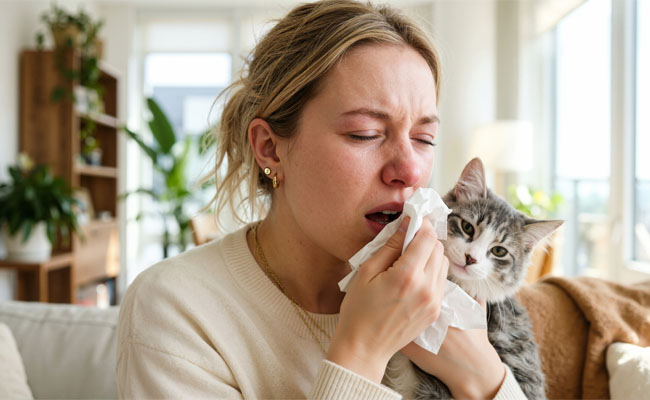
What Are Pet Allergies?
Pet allergies can occur with any type of animal, not just dogs and cats. Cats are the most common type of pet allergy that humans experience; however, dogs, rabbits, birds and other animals may also cause a reaction.
Causes of Pet Allergies
Pet allergies result from the overreaction of your body’s immune system to a protein found in animal dander (dead skin cells), urine or saliva. These allergens can be found everywhere, from carpets and furniture to your own hair and clothes. Dander, specifically, travels easily through the air and is known as an aeroallergen. This causes increased exposure and likelihood of a reaction.
Symptoms of Allergic Reactions to Pets
A common type of allergen, allergic reactions to your family’s pet can look like:
• Itchy eyes
• Sneezing
• Stuffy or runny nose
• Hives
• Asthma flare-ups
New or Worsening Allergic Reactions
Though most pet allergies appear early in life, it is common for adults to experience new or worsening allergic reactions to animals. This can be caused by several possible factors like stress, hormonal shifts or increased exposure to animals. Hormonal changes like pregnancy or menopause, as well as high stress, alter how your body reacts to its surrounding environment.
For exposure changes, this can be known as the “Thanksgiving Effect.” Commonly seen in adults in their 20s, this phenomenon refers to college students coming home for the first time during Thanksgiving and experiencing sudden allergic reactions to family pets. Sudden changes in exposure can cause adults to develop pet allergies later in life.
Managing Pet Allergies in Adults
There are several steps you can take as an adult suffering from pet allergies.
• Minimize Exposure to the Animal: We understand this isn’t always a possibility with a beloved family pet; however, decreasing exposure is the best way to provide relief.
• Medication: Over-the-counter medication, steroidal and antihistamine nose sprays or antihistamine pills may be recommended by your allergist.
• Clean Your House Frequently: To help reduce the amount of dander, clean your house often. This includes vacuuming, washing bedding and pet equipment or investing in an air purifier.
• Allergy Shots: Immunotherapy (allergy shots) is a well-performing option that often allows owners to stay with their pets with little reaction. Allergy shots include injecting small amounts of specific allergens into your body to gradually desensitize the immune system over time.
Pet Allergy Relief in Tennessee and Georgia
If you have been experiencing new allergy symptoms after contact with an animal as an adult, you may be suffering from late onset pet allergies. If so, it’s time to schedule a visit with an allergist.
With locations in Tennessee and Georgia, The Allergy Asthma Group of Galen’s board-certified allergists can provide you with the relief you need. Schedule an appointment today to learn more about our allergy relief options!
See An Allergy Specialist Near You